Maximum privacy window tint improves daytime concealment, heat rejection, and glare control, but it reduces nighttime visibility by limiting visible light transmission (VLT). This reduction directly affects how clearly a driver can perceive low-light hazards such as pedestrians, cyclists, and road debris. In practical driving terms, the darker the tint, the more the driver depends on headlights and ambient lighting, which can increase reaction time and reduce safety margins in poorly lit conditions.
The key trade-off is not simply comfort versus discomfort; it is visual information loss versus environmental control. A well-balanced tint level preserves enough light for safe night driving while still delivering meaningful privacy and UV protection.
Understanding the Core Trade-Off Between Privacy and Visibility
Window tinting is fundamentally a light management system. Every film is designed to modify the amount of visible, infrared, and ultraviolet light that passes through vehicle glass. Among these, Visible Light Transmission (VLT) is the most important factor affecting nighttime driving performance.
In real-world use, drivers rarely notice tint limitations during daytime travel. The issue becomes apparent only after sunset, when the human visual system shifts into low-light adaptation mode. At that point, even small reductions in available light can significantly affect how quickly and accurately the brain interprets road conditions.
This is why two vehicles with identical tint specifications can still feel different at night, depending on:
- Street lighting conditions
- Weather (rain, fog, snow)
- Headlight quality and alignment
- Driver vision sensitivity
The environment amplifies the effects of tint darkness.
How Tint Darkness Affects Night Driving Performance
Reduced Luminance and Visual Adaptation Strain
At night, the human eye relies on rod cells, which are highly sensitive to light but poor at resolving fine detail. When tint reduces incoming luminance:
- The eye takes longer to adapt between bright and dark zones
- Object edges appear less defined
- Distance judgment becomes less accurate
This is especially noticeable when moving from brightly lit intersections into darker side streets, where the eye must constantly re-adapt.
Contrast Sensitivity Degradation
Contrast sensitivity is the ability to distinguish an object from its background. It is more important than sharpness in night driving conditions.
Heavily tinted windows reduce contrast in subtle but meaningful ways:
- Dark clothing blends into asphalt or shadows
- Unlit pedestrians become harder to detect until closer range
- Road debris or potholes lose definition against the pavement
This reduction in visual separation increases reliance on headlights and reduces the time available to respond to hazards. For drivers considering window tinting in Middletown, selecting the appropriate tint shade can help balance glare reduction, visibility, and overall driving comfort in varying light conditions.
Peripheral Awareness Reduction
Peripheral vision plays a critical role in detecting motion from the sides of the vehicle. Lower light transmission reduces peripheral sensitivity, meaning:
- Cross-traffic movement is detected later
- Cyclists or pedestrians entering the roadway are less visible
- Situational awareness becomes more forward-focused and less dynamic
This can subtly increase cognitive load during night driving.
Privacy vs Night Visibility: Technical Comparison
| Factor | Maximum Privacy Tint (5–20% VLT) | Balanced Tint (35–50% VLT) |
| Daytime Privacy | Very High | Moderate |
| Night Visibility | Significantly Reduced | High |
| Glare Reduction | High | Moderate–High |
| Hazard Detection Distance | Shorter | Longer |
| Eye Strain at Night | Higher | Lower |
| Legal Compliance Flexibility | Lower | Higher |
The table highlights a consistent pattern: maximum privacy configurations optimize concealment at the cost of low-light performance.
Key Tint Performance Specifications
Visible Light Transmission (VLT)
The percentage of visible light that passes through glass and film. Lower values indicate a darker tint and reduced nighttime visibility.
Infrared Rejection (IRR)
The percentage of infrared energy blocked by the film. This primarily affects heat reduction rather than visual clarity.
UV Protection Rating
Measures how effectively ultraviolet radiation is blocked, protecting interior materials and reducing skin exposure risk.
Ceramic Tint Technology
A non-metallic film structure that uses ceramic particles to reject heat while maintaining higher optical clarity than traditional dyed films.
Optical Distortion Level
The degree to which a film affects clarity is especially noticeable during night driving or in rainy conditions.
Real-World Driving Experience and Environmental Factors
In controlled lab conditions, tint performance is predictable. In real driving environments, it becomes highly situational.
Drivers consistently report that visibility issues are most noticeable during:
- Transitional lighting zones (bright → dark roads)
- Rainy or foggy weather conditions
- Rural or semi-rural roads with limited lighting
- High-glare oncoming traffic conditions
These conditions compound the effects of a darker tint because they already reduce baseline visibility.
Urban Driving Scenarios
In urban environments, street lighting can partially offset the reduction in VLT. However, frequent lighting changes create adaptation stress. Drivers may not struggle with constant darkness, but with repeated shifts in brightness.
Suburban Driving Scenarios
Suburban roads often have inconsistent lighting patterns. In these environments, moderate tint levels tend to perform better because they preserve enough ambient light for quick adaptation.
Rural and Low-Light Scenarios
In rural conditions, ambient lighting is minimal. Headlights become the primary visual source. In these cases, an overly dark tint can significantly reduce hazard detection distance.
Practical Installation Context and Driver Decision-Making
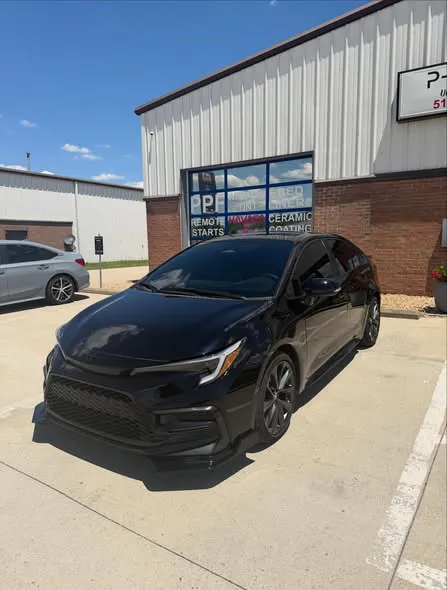
Many drivers initially prioritize aesthetics when considering window tinting in Middletown, OH, but their priorities often shift after experiencing night driving conditions firsthand. The difference between a visually appealing setup and a functionally optimized one becomes apparent in real-world use.
Professional installers typically evaluate:
- Daily driving routes
- Night driving frequency
- Local lighting conditions
- Vehicle type and windshield angle
- Legal VLT restrictions
This ensures the selected tint is not only visually consistent but also functionally appropriate.
Common Misconceptions About Window Tint Performance
Myth 1: Darker Tint Always Improves Safety
While a darker tint reduces glare from headlights, it also reduces environmental visibility. Safety depends on how early hazards are detected, not just glare control.
Myth 2: All Tint Materials Perform the Same
Film composition matters significantly. Ceramic films typically maintain better clarity and lower distortion than dyed films at the same VLT level.
Myth 3: Privacy and Night Visibility Can Be Fully Optimized Together
There is a physical limitation: increasing privacy by reducing VLT inherently reduces available light for nighttime vision.
Applying Tint Selection to Real Driving Behavior
Choosing the correct tint is best approached as a functional calibration rather than a visual preference.
Key considerations include:
- Percentage of night driving
- Exposure to unlit roads
- Weather conditions in the region
- Driver vision sensitivity and age
- Legal compliance requirements
A mid-range tint often provides the most balanced outcome because it preserves enough light for safety while still reducing glare and heat.
About Ceramic Pro South West OH
Ceramic Pro South West OH provides professional-grade automotive window film installation focused on performance, safety, and compliance rather than aesthetics alone.
The installation approach includes:
- Matching VLT levels to real-world driving conditions
- Using high-quality ceramic films for improved optical clarity
- Ensuring compliance with Ohio tint regulations
- Reducing installation defects that can impact visibility (haze, bubbles, distortion)
This performance-focused methodology ensures the tint system works effectively across both day and night driving conditions, not just under ideal lighting. This is an important consideration for Middletown window tinting, where drivers benefit from a solution that balances heat rejection, glare reduction, and visibility throughout changing road and weather conditions.
Misconception: Maximum Privacy Equals Maximum Heat Protection
A common misunderstanding is that a darker tint automatically provides superior heat rejection. Modern ceramic films, however, achieve heat reduction through infrared filtering rather than darkness. This allows for strong thermal performance even at higher (lighter) VLT levels, preserving visibility while maintaining comfort.
In Summary
The trade-off between maximum privacy tint and nighttime driving visibility is a functional engineering decision rather than a purely aesthetic one. While a darker tint improves privacy and reduces daytime glare, it also reduces the available visual information at night, which can affect reaction time and hazard detection. A balanced tint level, selected based on actual driving conditions and professionally installed, typically delivers the safest and most practical long-term result. Ceramic Pro Southwest OH helps drivers choose the appropriate window tint solution based on their visibility needs, comfort preferences, and local driving conditions.
For expert recommendations and precision installation tailored to real-world driving needs, contact us today
Frequently Asked Questions
Does darker tint reduce night driving visibility?
Yes. Lower VLT reduces available light, making it harder to detect objects in low-light environments.
What tint level is best for everyday driving?
Most drivers benefit from 35–50% VLT for balanced visibility and comfort.
Is ceramic tint better at night than dyed tint?
Yes. Ceramic films generally provide clearer optical performance and less distortion.
Can tint reduce glare without reducing visibility too much?
Yes, but only up to a point. Ceramic technology helps reduce glare without requiring extreme darkness.
Is maximum privacy tint legal everywhere?
No. Legal limits vary significantly by state and often restrict very dark front-side tint.